
Stop Rohingya being sent to giant prison camps in Burma
Burma and Bangladesh are planning to send tens of thousands of Rohingya who fled to Bangladesh back to Burma.
Rohingya in Bangladesh haven’t been consulted about the deal, but most say they don’t want to return until it’s safe.
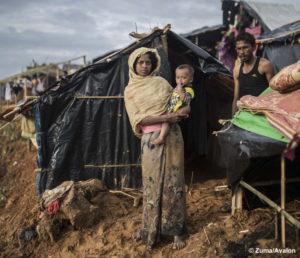
Rohingya won’t be allowed to return to their villages, which have been destroyed. Instead they are being sent to giant prison camps. Rohingya put there will not be allowed to live elsewhere or travel freely.
The government of Burma hasn’t changed any of the laws and policies which discriminate against the Rohingya, and cannot guarantee that the military won’t attack them again when they return.
The government of Burma doesn’t have the resources to build and maintain these prison camps, they can only do it with international support. Incredibly, the governments of Japan and India are providing that support. The Japanese government has pledged $3m and the Indian government has pledged money and offered to construct buildings in the camps. The Burmese government says 80 people will be forced to live in each building.
Repatriation plan leaves Rohingya ‘at risk of further attacks’ – Sky News
The agreement between Burma and Bangladesh to repatriate Rohingya refugees is like expecting 1940s Jews to return to Nazi Germany, says Sky News.
Mark Farmaner from Burma Campaign UK told Sky News: “Bangladesh and Burma are effectively playing ping pong with the Rohingya, while the rest of the international community stands by. They will be returned to giant prison camps, have no rights, and be at constant risk of further attacks by the Burmese military.”
Pope fails to speak out on behalf of the Rohingya – the Atlantic
On his visit the pope appealed to Burma’s leading Buddhist monks to combat prejudice and intolerance, but left out any specific reference to the Rohingya.
“You don’t counter racism and prejudice by backing down to it,” Mark Farmaner, director of Burma Campaign UK, told the Atlantic. “Already nationalists are gloating about the pope not using the word ‘Rohingya.’ His failure to use the word will only embolden those who want to expel all Rohingya from Myanmar.”
Pope speaks of forgiveness but doesn’t mention Rohingya – VOA News
Papal advisers counseled the Pope not to speak about the Rohingya on his visit for fear of a backlash against the 650,000 Catholics in Burma, reports the Voice of America.
But human rights advocates urged him to speak out. Mark Farmaner, head of Burma Campaign UK, said on Twitter: “If the pope doesn’t use the word Rohingya, racist nationalists will see it as a victory, if he does, they will be upset and may protest. Which is better?”
Min Aung Hlaing tells Pope ‘no religious discrimination’ – CNN
CNN reports that after meeting Pope Francis during his visit to Burma, Senior General Min Aung Hlaing said all faiths in the country are able to worship freely.
Mark Farmaner, director of Burma Campaign UK, is quoted: “Min Aung Hlaing is the biggest obstacle to improving human rights, democratic reform, peace, modernization, and improving health and education in Burma.” While the Pope has spoken out in support of the Rohingya in the past, says CNN, it remains to be seen how much he will press the matter while in Myanmar.
Pope Francis faces diplomatic challenges with visit – VOA News
Pope Francis visits Burma and Bangladesh next week amid international outrage over what the US describes as the ethnic cleansing of the Rohingya Muslim minority, reports the Voice of America.
In an interview with VOA News, Mark Farmaner, Burma Campaign UK’s director, explains: “If he uses the word Rohingya, some of the Buddhist nationalists might then protest and complain about that. And some of the Catholics in the country are very nervous about that because they fear that they could be targeted by nationalists.”
Deal For Rohingya refugees to return not enough – BuzzFeed News
Mark Farmaner, director of Burma Campaign UK, criticised the deal between Burma and Bangladesh to repatriate Rohingya refugees who have filled out their personal details on forms. He described the deal as a way of “buying time”, since sluggish bureaucracy in both countries means that it could take years to cross-check refugees’ identities.
“When people are fleeing their homes under attack they’re not grabbing their ID cards, if they have them,” he told BuzzFeed News. “The main problem is not how long it takes to return, or the conditions they have to meet to return. The problem is that it’s not safe to return. Unless we start to see really strong sanctions against the military, so that they face real pressure, we’re going to see a repeat of this crisis all over again.”
Why is the US Government funding anti-Rohingya propaganda? – Daily Beast
Commenting on The Irrawaddy’s reporting on the Rohingya crisis, New York’s Daily Beast says the Yangon-based paper, which receives funding from USAID, has parroted Burmese government propaganda.
“Decades of hard work building the reputation of The Irrawaddy has been undermined by the editor in chief deciding to abandon journalistic independence and come down on the side of racists saying the Rohingya don’t belong in Burma,” said Mark Farmaner, director of Burma Campaign UK.
Aung San Suu Kyi complicit in Rohingya ‘ethnic cleansing’ – the Guardian
“On several issues she’s part of the problem”, Mark Farmaner, director of Burma Campaign UK, told MPs.
Giving evidence to the International Development Committee, Mark Farmaner is quoted in the Guardian: “She has kept political prisoners in jail. Although she hasn’t the power to stop their arrests, she has the power to release them – including a 14-year-old recently jailed who was arrested by the Burmese army. She can repeal repressive laws, she has powers to improve human rights. She’s choosing not to.”
Calls for Britain to investigate ‘crimes against humanity’ – Sky News
In testimony to the House of Commons International Development Committee, Burma Campaign UK’s director said Aung San Suu Kyi was complicit in the persecution of the Rohingya.
Mark Farmaner said her “near heroine status” should now be re-evaluated, drawing attention to what he called her “authoritarian tendencies” and her decision not to repeal repressive laws.